

Business Operations · Restaurants, shops and service businesses
Switching payment processors before season: a timeline for South Florida shops and restaurants
In much of South Florida the busy months arrive with the winter visitors. A processor or POS change that runs into that season can cost more in a bad weekend than the new rates save in a year. Timing is most of the plan.
By Pinnacle Management Ventures · · 4 min read
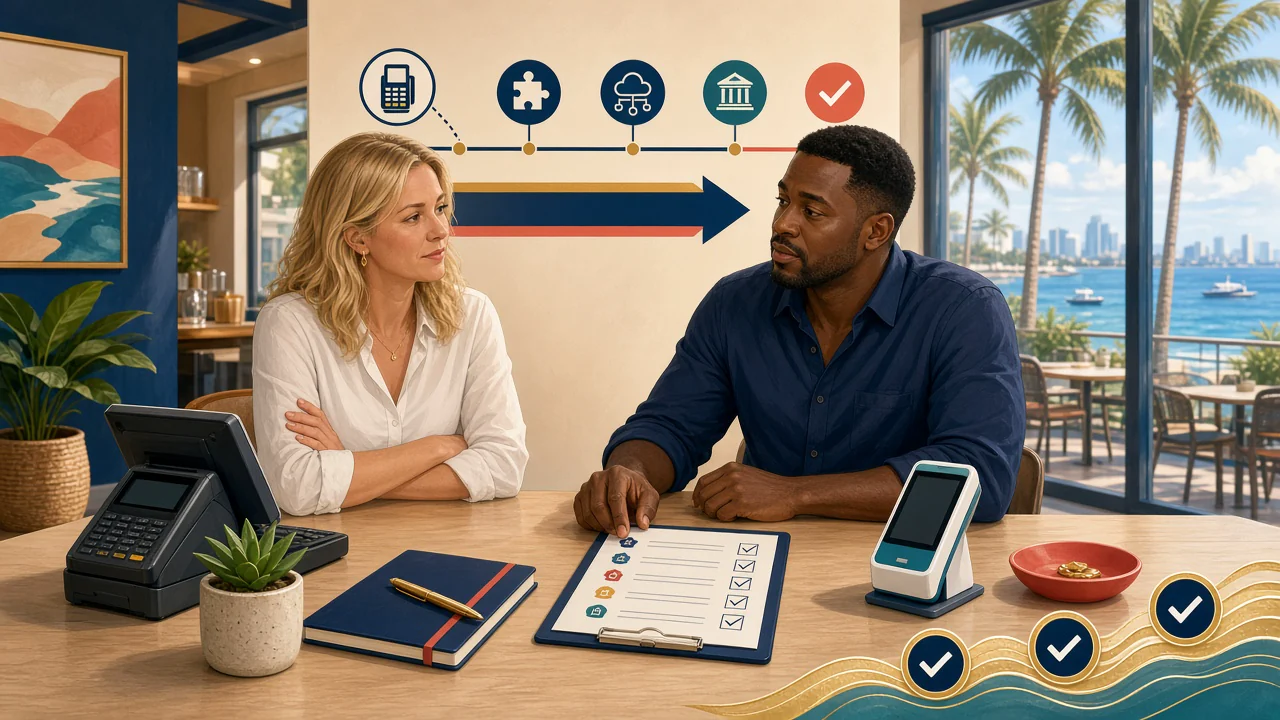
The short version
- Start in summer, cut over in the early fall, and leave weeks of quiet time before your busiest stretch. Do not go live on a holiday week.
- Read your current contract for the term, the renewal date, any early termination fee and any equipment lease, before you sign anything new.
- Make a list of everything the old system touches: online ordering, gift cards, loyalty, payroll tips, inventory, accounting and reports.
- Run the old and new systems side by side for a short period if you can, and check that deposits land in the bank in the amount you expect.
- Keep the old account open until the first full month on the new one has closed and reconciled.
Why the calendar matters more than the rate
For a lot of restaurants, cafes, boutiques, salons and service businesses from Miami Beach to Palm Beach, the busy months come in winter, with the seasonal residents and visitors. A switch that goes wrong in July is an annoying week. The same switch going wrong over a holiday weekend in December or during a busy event week is lost sales, angry customers and staff who stop trusting the new system.
Most of the trouble in a processor or POS change is not the card terminal. It is everything connected to it: online orders, gift cards, tips, the menu, inventory counts, the accounting export. Each one is a small piece that is easy to forget until it stops working.
A timeline that works backward from season
| When | What to do |
|---|---|
| Early summer | Pull your current contract and statements. Note the term, renewal date, early termination fee and any equipment lease. Start collecting quotes. |
| Mid summer | Choose the provider. List every system the current one connects to. Ask the new provider which of them it supports and how each one moves over. |
| Late summer | Order hardware. Build the menu or item list in the new system. Set up taxes, tips, discounts and user permissions. Plan data exports. |
| Early fall | Train staff. Go live on a slow day. Run both systems side by side for a short period if you can. |
| Fall | Reconcile every deposit against sales. Fix reports. Close the old account once a full month has reconciled. |
| Season | Leave it alone. No changes during your busiest weeks. |
If your busy season falls at a different time, slide the whole plan so that the quiet stretch before it is the part after go-live, not the part before.
Read the current contract first
Before anything new is signed, find out what leaving the old provider costs. The answer is usually in the merchant agreement and the equipment paperwork, not in the sales conversation.
What to find in your current agreement
- The term, and whether it renews automatically
- The renewal date, and how much notice cancelling requires
- Any early termination fee, and how it is calculated
- Equipment: owned, rented or leased, and whether a lease runs separately from the processing contract
- Who holds your customer data and stored cards, and whether they can be exported
- How the final deposits and any reserve are released after you close the account
Make a list of everything it touches
- Online ordering and delivery apps
- Gift cards and store credit, including balances customers already hold
- Loyalty and rewards programs
- Tips, tip pooling and how tips reach payroll
- Inventory and the menu or product list
- Accounting software and the daily sales export
- Reports your accountant, partners or landlord rely on, such as percentage-rent reporting
- Customer records and saved cards for repeat billing
Gift card balances and saved cards deserve special attention. They belong to your customers, and the provider that holds them may not be able to hand them to a new one in a form it can use. Ask both providers how that move works before you commit.
Go-live, and the month after
- Pick a slow weekday for go-live, with a manager on site who knows the new system.
- Have a fallback ready for the first few days, such as one old terminal kept live if your contract allows it.
- Check the first deposits against the day’s sales, line by line, until they match for a week straight.
- Fix the reports your bookkeeper uses before the month closes, not after.
- Close the old account in writing once a full month has reconciled, and keep the confirmation.
Contract terms vary by provider. Read your own agreements, and ask an accountant or attorney about anything that affects your books or your obligations.
Sources
Checked October 21, 2026. Rules change; the official page is the final word.