

Documents & Notary · Adult children and caregivers
Notarizing at a hospital or assisted living facility: what families should prepare
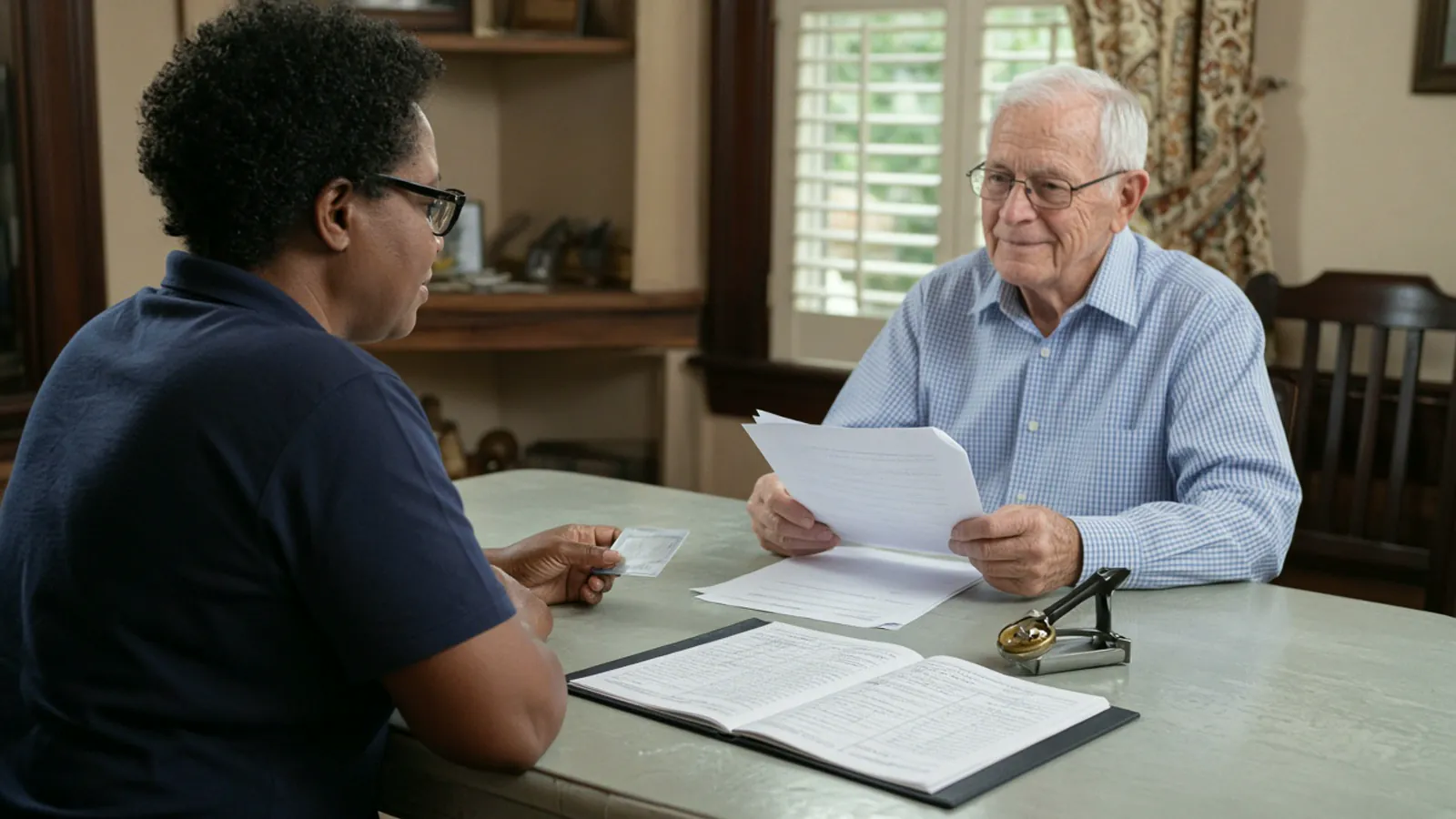
When a parent is in the hospital or a care facility and a power of attorney or health care directive needs signing, the notary visit is often arranged in a hurry. A little preparation is the difference between a signing that happens and one the notary has to refuse.
By Pinnacle Management Ventures · · 3 min read
The short version
- The signer needs acceptable identification, such as a current Florida driver license or ID card, a U.S. passport or another ID Florida law allows, or two credible witnesses who can identify them.
- Florida law says a notary may not notarize a signature if the signer appears unable to understand the nature and effect of the document at the time. Plan the visit for when the signer is most alert.
- Many documents, including a power of attorney, also need two witnesses. Arrange them in advance; facility staff are often not allowed to act as witnesses.
- Have the documents fully prepared before the notary arrives. A notary cannot draft documents or give legal advice.
- Florida caps the notary fee at ten dollars per notarial act. A mobile notary’s travel fee is a separate charge; get it in writing first.
Identification: the part that stops most signings
In a hospital or care facility, the signer’s wallet is often at home, and an expired license is common. Find the ID before you book the mobile notary.
If the signer has no acceptable ID, ask the notary in advance about using credible witnesses. They must personally know the signer and meet the statute’s conditions, and they need their own ID.
The notary’s duty about understanding
This is the notary’s judgment in the moment, and a good notary will talk with the signer briefly before starting. It is not a medical assessment, and it is not the notary taking sides. It protects the signer and the family, because a document signed by someone who did not understand it can be challenged later.
- Ask the nurse or staff when the signer is usually most alert, and book then.
- Avoid times right after medication that causes drowsiness, or right before a procedure.
- Let the signer read, or have read to them, what they are signing before the notary arrives.
- If the signer is very ill or their understanding is in question, talk to the attorney who prepared the documents first.
Witnesses
Many documents need witnesses as well as a notary. A Florida power of attorney, for example, must be signed by the principal and two subscribing witnesses and acknowledged before a notary. Health care directives and wills have their own witness rules.
Arranging witnesses
- Ask the attorney or the form’s instructions how many witnesses the document needs, and who may serve
- Bring witnesses with you, with their own photo ID; many facilities do not let staff serve
- Check whether a family member who benefits under the document should be a witness; for some documents they should not
- Remote witnesses are not allowed in Florida when the signer is a vulnerable adult, so in a care facility, plan on witnesses in the room
Planning the visit
- Documents complete and ready, with blanks filled in, but not signed
- The signer’s ID found and checked for the expiration date
- Witnesses confirmed, with their IDs
- The facility’s visitor rules checked: hours, check-in, and whether the notary needs to be on a list
- A quiet spot arranged with staff, and a pen that works
- Copies planned: who keeps the originals, and who gets copies
This is general information about Florida notary law as of the date above, not legal advice. A notary cannot draft documents, choose a document for you or advise you on its effect. For that, talk to a Florida attorney.
Sources
Checked October 21, 2026. Rules change; the official page is the final word.